


What a website popup builder should do beyond collecting emails
Most popups on the web exist to grow a mailing list, and most visitors have learned to close them without reading. A popup builder earns its place when it does more than that: shows the right message to the right visitor at the right moment, proves which version actually works, and connects the lead it collects to the sale it eventually produces.
That is the difference between a popup as decoration and a popup as a sales channel that sits next to the store and email campaigns.
Templates, targeting and A/B tests
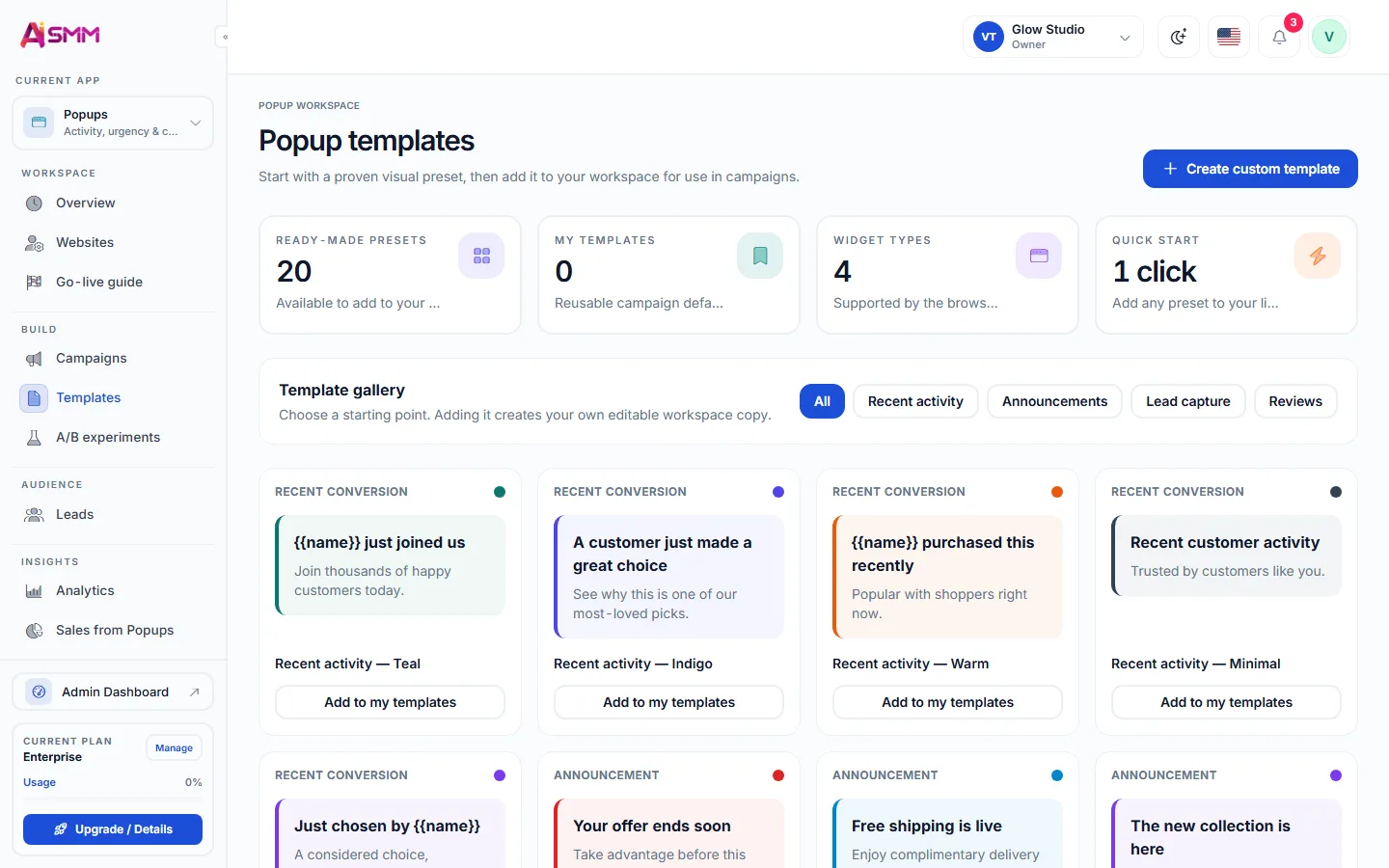
A template gets a popup live in minutes: a lead form, a social proof widget showing recent activity, or an urgency message tied to a limited offer. Targeting decides when and to whom it appears, so a returning customer is not shown the same first-order discount as a new visitor. A/B testing then settles, with real numbers, which version of the message or the offer performs better, instead of relying on a guess.
Conversion tracking and sales attribution
A click on a popup is not the same as a sale, and treating the two as equal leads to the wrong conclusions. Conversion tracking follows what a visitor does after closing the popup, and attribution connects that path to an actual sale, so you can see which popup earns its place on the page and which one just adds noise.
Sending leads onward with webhooks
A lead collected on the site rarely stays useful sitting inside the popup tool alone. Webhooks send it to wherever you actually work with leads, whether that is a CRM, a spreadsheet, or a chat flow that starts a conversation automatically the moment the form is submitted.
Choosing a popup and lead form tool for a small site
- Look for targeting by page, timing and visitor behavior, not a one-size-fits-all popup.
- A/B testing should be built in, not a separate tool to wire up.
- Attribution should reach the sale, not stop at the click.
- Webhooks should exist so leads reach your CRM or a web push welcome series without manual work.