

What web push notifications are and why a site needs them
Web push notifications are messages that appear on a subscriber’s screen, in the browser, without an app and without an email address. A visitor subscribes with one click while on the site, and from then on the business can reach them directly, on desktop or mobile, whenever there is news worth sending.
For a small business, this closes a gap that email and social media leave open: a visitor who never gives an email address and does not follow you on social media can still be reached again.
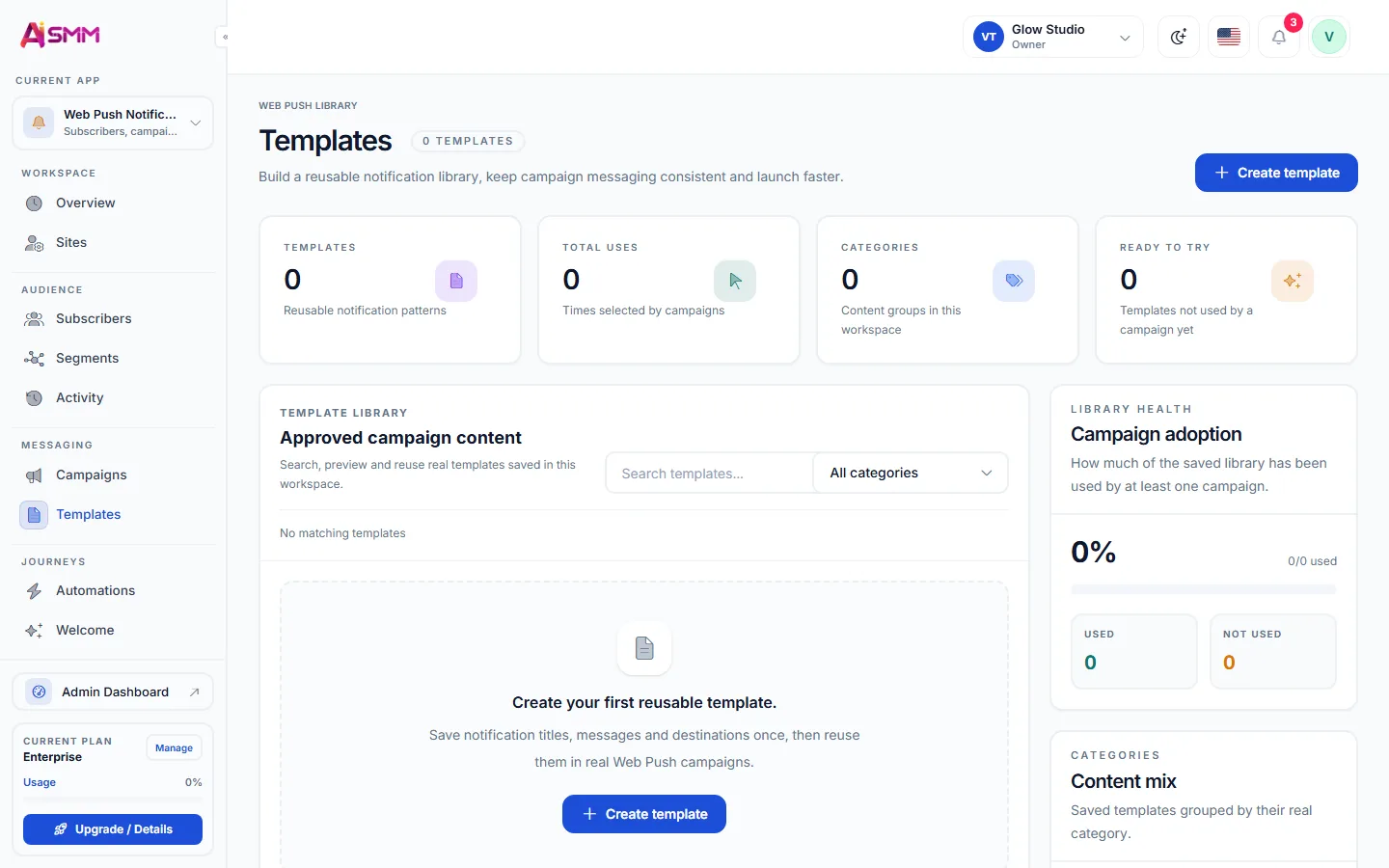
Segments, templates and welcome automations
Not every subscriber should see the same message. Segments group subscribers by what they browsed or how they behaved, so a message about a sale on one category does not go to someone who only ever reads a different one. A welcome series starts automatically the moment someone subscribes, so the first impression is set on purpose rather than left empty until the next campaign.
Turning an RSS feed into automatic pushes
Publishing a new article and then remembering to tell every channel about it is easy to forget. RSS to push closes that gap: the moment a new item appears in the feed, whether it comes from a blog or from AI-written articles, a push notification goes out on its own, without a person sitting down to send it.
Reading web push reports as a business owner
Reports on web push show which campaigns and automations actually bring subscribers back to the site, not just how many notifications were sent. That distinction matters because a high send count with no return visits is a sign to change the message or the segment, not to send more of the same.
When web push fits better than email or SMS
- The visitor never gave an email address, so it is the only direct channel available.
- The message is short and time-sensitive, like a sale ending soon or a back-in-stock alert.
- It works alongside email marketing and popups as one more way to reach the same visitor, not a replacement for either.