

What email marketing for small business actually requires
Email marketing for a small business is not about sending more emails; it is about sending fewer, better-targeted ones that a subscriber actually reads. That means lists split into segments, templates that do not take hours to build each time, and a way to tell whether a campaign led to a sale or just an open.
Deliverability sits underneath all of that: a well-designed campaign is worthless if it lands in spam, which is why checks run before problems reach the inbox.
Lists, segments and templates that save time
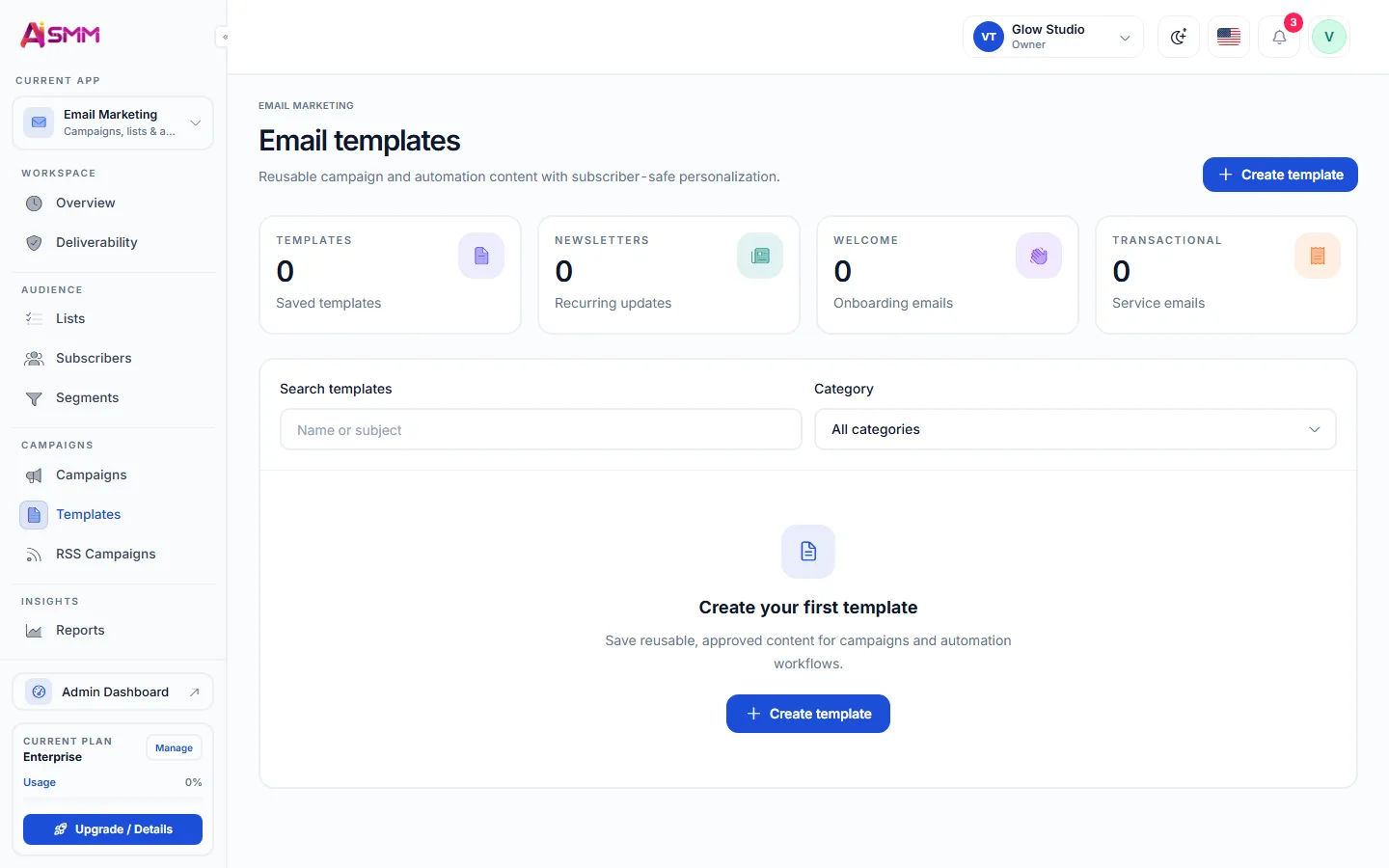
Subscribers rarely want the same message. Segments split a list by behavior, purchase history or interest, so a promotion for one product does not go to someone who only ever bought another. Templates keep a campaign’s design consistent without rebuilding it from scratch every time, which matters most when the person sending the email is also running the rest of the business.
Own SMTP, deliverability checks and reputation
Connecting your own SMTP provider means the sending reputation belongs to you, not to a shared pool that other businesses might damage. Deliverability checks run before that reputation gets tested by a real campaign, catching configuration issues that would otherwise quietly push emails into spam folders.
RSS campaigns and revenue attribution
An RSS campaign watches a feed, whether it comes from a blog or from AI-written articles, and sends a new post to subscribers automatically, without anyone building the campaign by hand each time. Revenue attribution closes the loop on the other end, tracing a sale in the online store back to the campaign that led to it, so the report shows money, not just opens and clicks.
What to check before choosing an email tool
- Can you connect your own SMTP provider, or are you locked into a shared one.
- Does the tool check deliverability before a campaign goes out.
- Does attribution reach an actual sale, not just a click.
- Can new blog posts become a campaign automatically through RSS.