

Why WhatsApp for business needs more than a phone
For many customers, WhatsApp is the messenger they already have open, which makes it a natural sales channel. The problem shows up as a business grows: one phone cannot be shared by a team, nothing tracks which conversation is a warm lead versus a closed deal, and a broadcast to many contacts at once is not something a personal chat app is built for.
A business tool solves that by keeping WhatsApp conversations in a shared inbox, next to sales pipelines and broadcast planning, the same way other channels already work.
A shared inbox and pipelines for the team
When every WhatsApp conversation lands in a shared inbox, any team member can answer without needing access to one specific phone. Pipelines add a second layer on top: a contact moves from a first message to a closed deal through stages the team defines, so at a glance you can see how many conversations are close to becoming a sale.
WhatsApp broadcasts and the campaign planner
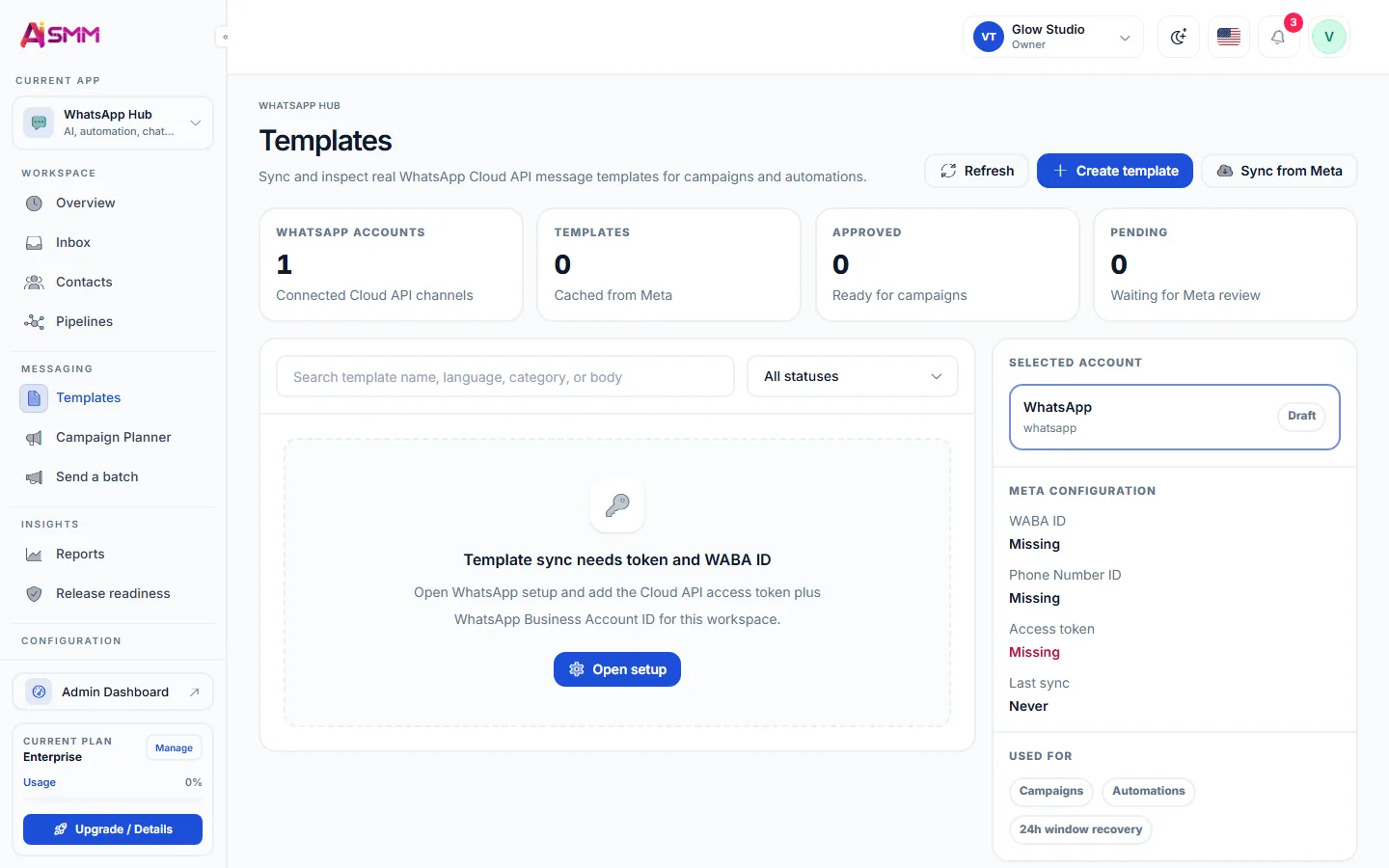
Templates and quick send handle one-off messages, but a broadcast to many contacts needs planning: the campaign planner schedules bulk messages ahead of time, so a promotion or a reminder goes out to the right list at the right moment instead of being sent one contact at a time by hand.
Automations with AI for routine WhatsApp questions
Not every message needs a person. Automations with AI answer routine questions, like prices or delivery times, straight from your own data, freeing the team to focus on conversations that need judgment. Reports on delivery and replies then show whether the automation is actually keeping up, or whether a template needs rewriting.
How WhatsApp fits with the rest of the inbox
- WhatsApp conversations sit in the same shared queue as the unified inbox, not a separate screen.
- A pipeline stage can trigger the same chat automation used across other channels.
- Reminders sent here work well next to online booking for appointment-based businesses.