

What an MCP connector for Claude actually means
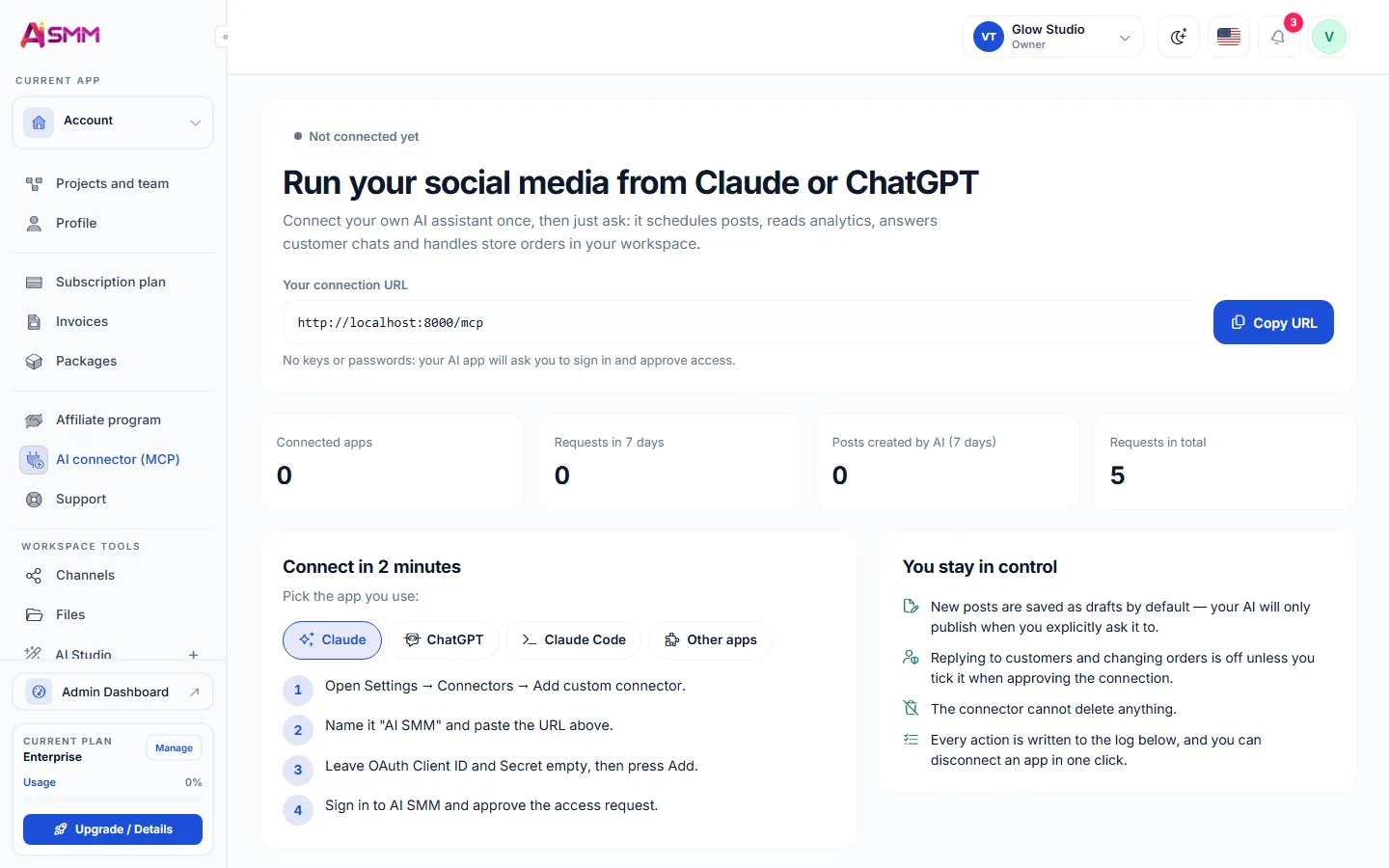
MCP is the standard way an AI assistant like Claude connects to an outside application with the application’s permission, rather than through screenshots or copy-pasted text. Connecting AI SMM as an MCP connector means Claude can read your workspace data directly, and if you allow it, act on it too, all inside a conversation instead of a separate dashboard.
That matters for a small business owner who thinks in tasks, not menus: “what did last week’s posts do” is a question, not a series of clicks through analytics.
Signing in with OAuth instead of a shared password
Connecting through OAuth means you sign in on AI SMM’s own login screen, and Claude receives a token that proves access without ever seeing your password. That is the same pattern used by countless apps that connect to your Google or Microsoft account, and it means the connection can be reviewed and revoked without changing any password.
Choosing read-only or read and write access
Not every use case needs the same level of trust. Read-only access lets Claude answer questions about your data, like stats or a past conversation, without being able to change anything. Read and write access adds the ability to act, such as scheduling a post or updating a contact, and you choose which level fits how you plan to use the connector.
What you can ask once the connector is set up
Once connected, requests stay in plain language: ask to plan a week of posts, check how a campaign performed, or find what a specific customer said in the inbox. The connector translates the request into the same actions you would otherwise take by hand inside the dashboard.
Keeping access under control
- Access is scoped to your own workspace only, never to other AI SMM accounts.
- You can revoke access at any time, which immediately ends what Claude can see or do.
- Choosing read-only access is a reasonable default until you are comfortable with write actions.