


Social media for a clinic: inform, don’t promise
Health advertising is regulated in most countries, and the rules differ: some restrict before/after photos, patient testimonials or claims about results. Check your local rules before launching, and keep posts educational: how a check-up works, when to see a specialist, what a procedure involves.
In the content calendar every post can wait for a doctor’s approval in Telegram, so nothing is published without a specialist’s yes.
Online booking by doctor and service
The booking page shows services with duration and price and each doctor’s free windows. Patients book without calling, confirmations and reminders go out on their own, and the waiting list can take a freed slot.
What AI should and shouldn’t answer
- Yes: prices, opening hours, address, which doctor sees what, how to book.
- Only from your texts: preparation notes the clinic has written and approved.
- No: symptoms, diagnoses and treatment. Keep them out of the knowledge base and let a person reply.
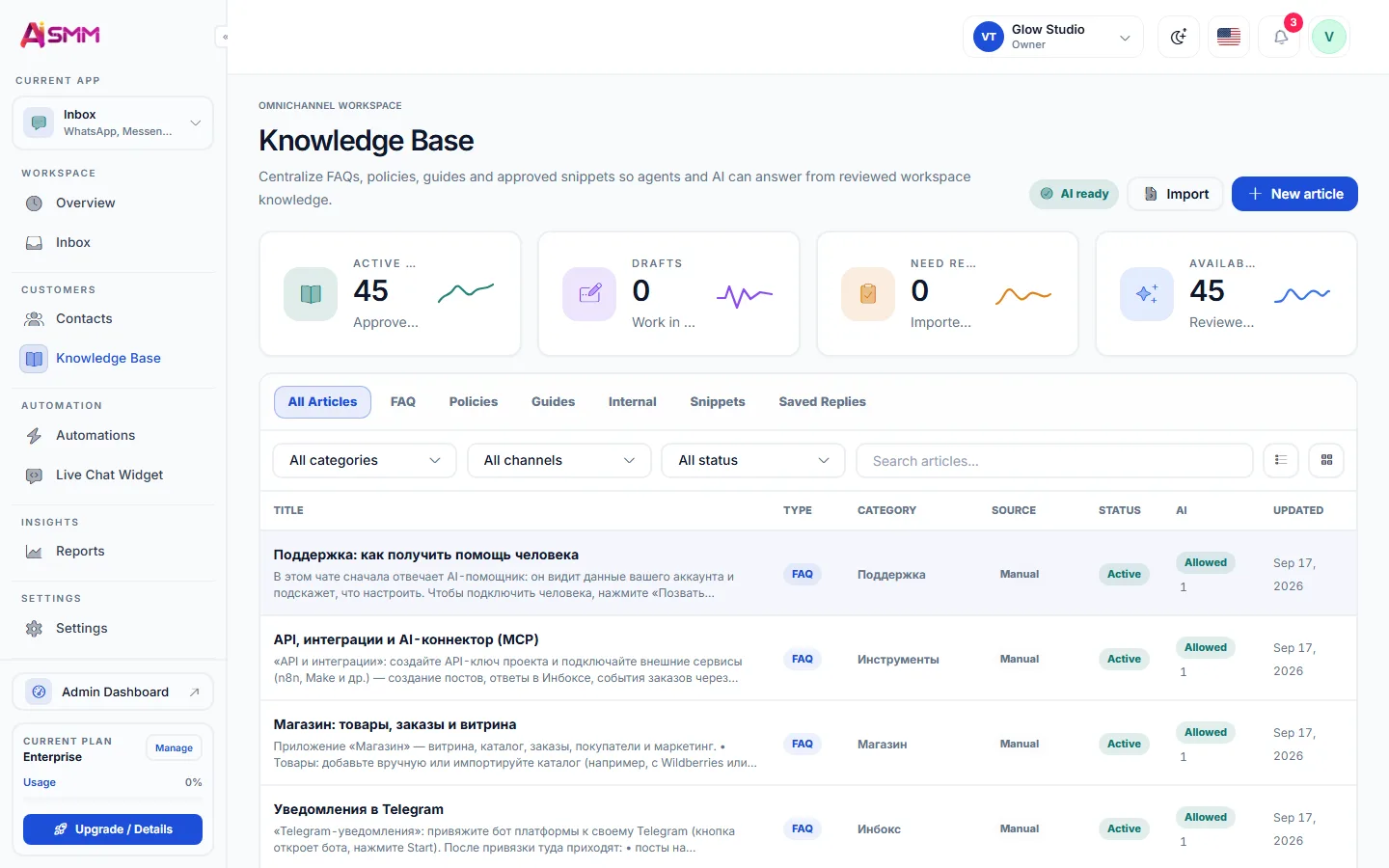
In the AI knowledge base you choose per channel whether AI sends replies or only drafts them, and it hands the conversation to a person when it is not sure.
Being found by patients nearby
People search before they call: “how much is an MRI”, “when to see an orthopedist”. The SEO module suggests article topics with real search demand; AI drafts them, and a doctor reviews the text before it goes to the website.
Patient data in chats
Messengers are convenient for booking questions, but not for medical details. Ask patients not to send test results or diagnoses in chats, and check your local data protection rules for how long you keep conversations.