
 AI SMM team
Social media for fitness studios has one job that matters more than likes: turning a person who is “thinking about starting” into someone standing in your studio for a first class. Most studios post the schedule, a few gym selfies and a discount in January, then wonder why the feed grows slowly and the evening classes still have empty mats. This guide covers what to post, how to move people from a comment to a booked trial class, a weekly plan a small team can keep, and the mistakes that quietly cost studios members.
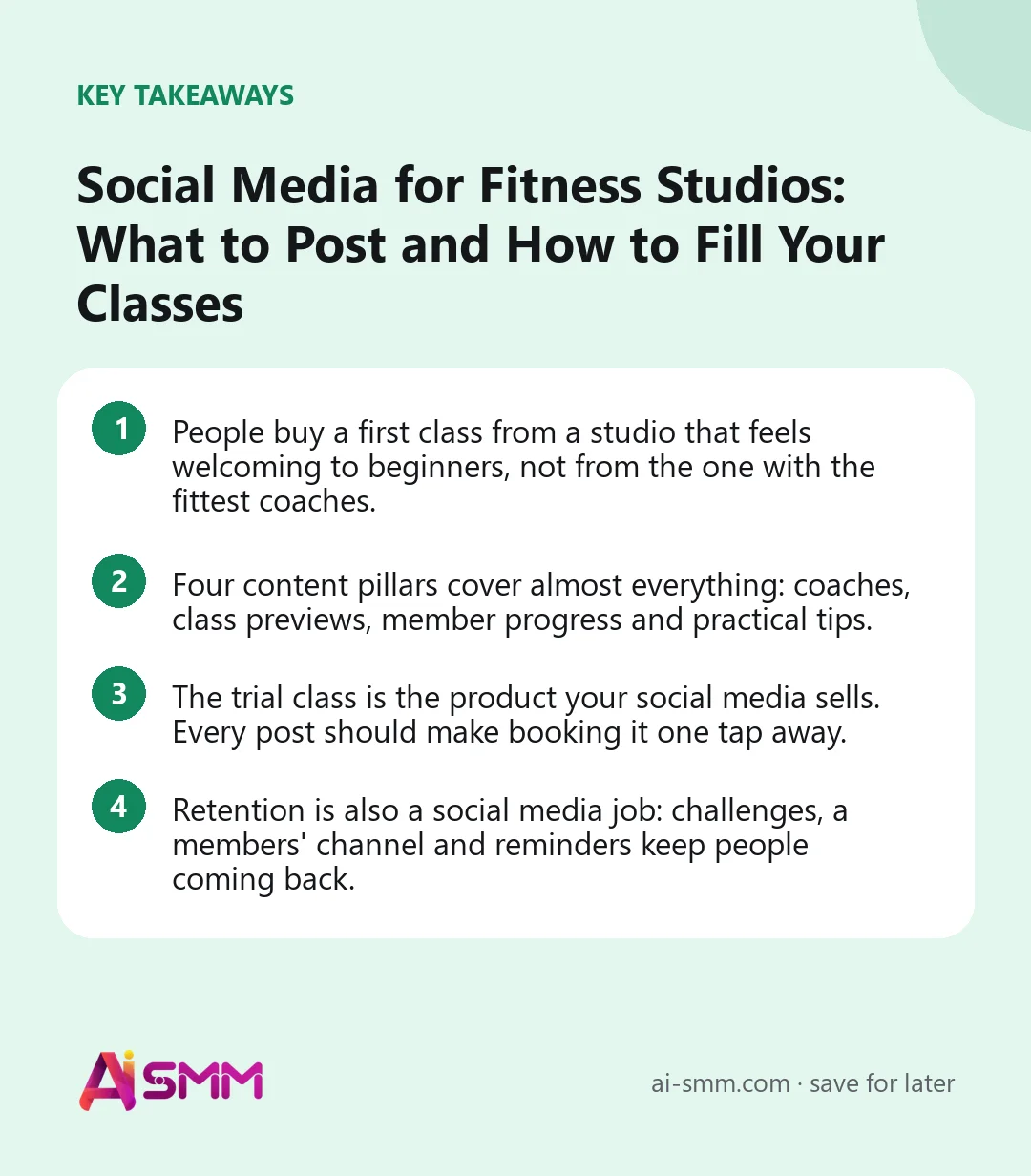
- People buy a first class from a studio that feels welcoming to beginners, not from the one with the fittest coaches.
- Four content pillars cover almost everything: coaches, class previews, member progress and practical tips.
- The trial class is the product your social media sells. Every post should make booking it one tap away.
- Retention is also a social media job: challenges, a members’ channel and reminders keep people coming back.
1. Why social media for fitness studios is about the first step
A fitness studio does not compete only with the gym down the street. It competes with the sofa, with a free workout app and with the fear of walking into a room full of strangers who already know the moves. That changes what your content has to do:
- Remove the fear. Show real classes with real people at different levels, not only the most athletic regulars.
- Show the people. Clients choose a coach they like. Faces, voices and personalities sell more than equipment.
- Make the next step obvious. A trial class, a first-week pass or a beginners’ session with a clear booking link.
Once someone has come three or four times, social media switches jobs: from attracting to keeping. We will come back to that in the retention section.
2. Pick the networks your members actually use
| Network | What it does for a studio |
|---|---|
| Main showcase: Reels from classes, coach introductions, Stories with the day’s schedule and free spots | |
| TikTok | Reach beyond your followers: short exercise tips, “what a beginner’s first class looks like” |
| Telegram | A members’ channel with the schedule, changes, challenges and short workouts for travel days |
| Local community, events, an older audience for Pilates, yoga and rehab-style classes | |
| YouTube | Longer home workouts and explanations that people find through search |
| One-to-one questions from new clients and reminders about their bookings |
A studio with one person handling marketing should run Instagram as the main channel, plus one supporting channel: TikTok if you want new people, a Telegram channel if you want to keep existing members engaged.
3. Content pillars with examples
Instead of deciding every morning what to post, build the feed from four pillars and rotate them.
Coaches and the team
- A 20-second Reel: “Meet Anna. She teaches Tuesday strength and never lets anyone skip the cool-down.”
- “Why I became a coach” in the coach’s own words, one short story per post.
- A coach’s favorite exercise for beginners, filmed in the studio.
Class previews
- “What happens in a 45-minute stretching class” in one minute of footage.
- A carousel explaining class levels: which one to pick if you have not trained for a year.
- Behind the scenes before a class: music, setup, the room before people arrive.
Member progress and community
- Members’ milestones shared with permission: first pull-up, a month without missing a class.
- Photos from a Saturday group run or a studio birthday.
- Short quotes from members about how they felt after the first week.
Practical tips
- “Three stretches for people who sit all day.”
- Common form mistakes in a squat and how to fix them.
- What to eat before an evening class, framed as general advice, not a diet plan.
A good starting ratio: about 30% class previews, 25% coaches, 25% tips and 20% community. Adjust after a month based on which posts bring messages, not which bring likes.
4. Film classes without making members uncomfortable
Video is the strongest format for a studio, and also the easiest place to lose trust. A few rules keep both sides happy:
- Ask before filming, and have a “no camera” corner for people who do not want to appear.
- Film coaches, hands and movement rather than faces of members who have not agreed.
- Choose flattering moments, not people mid-struggle. Nobody wants their hardest rep to become content.
- Keep it real. Light, sound and a steady phone are enough. Polished ads often feel less welcoming than honest footage.
- Add subtitles to every Reel, since most people scroll with sound off.
One well-filmed class can supply a week: a full Reel, two short tips, a coach close-up for Stories and a few photos for a carousel.
5. Get leads from chats and booking
Most questions a studio gets on social media repeat: “how much?”, “I’m a total beginner, is it OK?”, “do I need to bring anything?”, “is there parking?”. The studio that answers fast and offers a specific time wins the client.
A simple path from comment to trial class
- A post ends with a call: “Comment TRIAL and we will send you the beginner’s schedule.”
- The person gets a public reply and a direct message with the schedule, the price of the trial and what to bring.
- The same message has a link to the booking page where they choose the class and time.
- They receive a confirmation right away and a reminder the day before.
- After the class, a short message: “How did it feel? Here is the offer for your first month.”
Qualify with a short quiz
Two or three questions help you recommend the right class instead of sending everyone the same list: “What is your goal: strength, flexibility or losing weight?”, “How often did you train in the last year?”, “Mornings or evenings?”. The answer tells you which trial to offer, and the person feels you listened.
Do not lose people after the trial
The gap between a trial class and a paid membership is where most studios lose clients. Send the offer the same day while the person still feels good, keep it valid for a few days only, and have a real person reply if they ask anything.
6. Keep members coming back
A new member costs far more to attract than an existing one costs to keep. Social media can help with retention too:
- Monthly challenges: “12 classes in 30 days”, with points for each visit and a small prize for everyone who finishes.
- A members’ channel: schedule changes, a new coach, a short home workout for the holidays.
- Referral offers: a free class for both the member and a friend who signs up.
- Win-back messages: a friendly note to someone who has not booked for three weeks, with an easy class to return to.
Keep challenges fun and inclusive. A leaderboard should reward consistency, not who lifts the most, so beginners feel they can win too.
7. A weekly plan for a small studio
| Day | Post | Goal |
|---|---|---|
| Monday | Stories with this week’s schedule and classes with free spots | Bookings for the week |
| Tuesday | Reel: a 30-second tip from a coach | Reach, new followers |
| Wednesday | Carousel: class levels or “your first visit, step by step” | Remove fear for beginners |
| Thursday | Coach introduction or behind-the-scenes Reel | Trust and personality |
| Friday | Member milestone or challenge update | Community, retention |
| Saturday | Stories from the weekend class, poll for next week’s theme | Engagement |
| Sunday | Telegram post: next week’s schedule and one home workout | Keep members active |
This takes about two hours a week if you batch it: film on one busy evening, write captions in one sitting and schedule everything in advance. Only Stories and replies happen live.
8. Common mistakes studios make
- Only posting the schedule. A timetable tells people when, but not why they should come.
- Showing only advanced athletes. Beginners see perfect bodies and decide the studio is not for them.
- Slow replies. A question about price answered the next afternoon is usually a lost client; they booked somewhere else.
- No clear next step. A great Reel with no booking link in the profile wastes the attention it earned.
- Promising results. “Lose 10 kg in a month” attracts the wrong expectations and may break advertising rules. Talk about habits, energy and progress instead.
- Discounts as the only hook. Constant sales train people to wait for the next one.
- Ignoring members who stopped coming. A friendly message after a few weeks of silence brings back more people than a new ad campaign.
9. How AI SMM helps a fitness studio
AI SMM puts the whole path from post to visit into one workspace. The AI content studio writes captions in your studio’s tone and turns one brief about a monthly challenge into a dated content plan, and all posts go into one calendar for Instagram, TikTok, Facebook and your Telegram channel. The booking page lists your classes and coaches with their own schedules, sends confirmations and reminders automatically and offers a freed slot to the waiting list when someone cancels.
Chat flows handle the “comment TRIAL, get the schedule” funnel, ask a short quiz to suggest the right class and follow up after the first visit, while the unified inbox keeps Instagram, Facebook, Telegram and WhatsApp conversations in one list so no question waits until tomorrow. Challenges with points, referral links and leaderboards run inside the same chats. Put the booking page, a few gift certificates from the store and your contacts on a link in bio page, and check in analytics which posts brought the most profile visits. For more ideas for businesses that serve a local neighborhood, see the local business solutions.
10. What to measure
- Trial classes booked from social media per week.
- Share of trial visitors who buy a membership within seven days.
- Average reply time to messages and comments.
- Members who took part in a challenge versus those who did not, and how often each group comes.
Followers and views are useful signals, but a studio lives on booked classes. If a type of post brings bookings, make more of it, even if it gets fewer likes.
FAQ
What is the best social media platform for a fitness studio?
For most studios Instagram is the main channel, because Reels and Stories show classes and coaches best. Add TikTok for reach to new audiences or a Telegram channel to keep current members engaged.
How often should a fitness studio post?
Three to five feed posts a week plus daily Stories is realistic for a small team. Consistency matters more than volume: a steady rhythm over months beats a burst in January.
Should we show prices on social media?
Show at least the trial price or a “from” price. People who have to ask for the price often do not ask at all. Full membership options can go in a pinned post or on the booking page.
How do we get members to share content about the studio?
Give them a reason: a challenge with a finish-line photo, a monthly member spotlight, a studio wall that is fun to film. Always ask before reposting and tag the member only with their permission.
Want every “how much is a class?” question to end with a booked trial? Set up a class schedule on the booking page in AI SMM and connect it to your posts and chats.
Posts, chats, video and sales in one workspace. 7 days free.
Start free