
 AI SMM team
Social media for dental clinics has a harder starting point than most niches: nobody scrolls their feed hoping to see a dentist. People avoid the topic until something hurts, and then they choose quickly, often based on which clinic looked calm, clear and trustworthy online. This guide covers what a clinic should post to build that trust, how to turn questions in comments and chats into booked appointments, a weekly plan a busy practice can keep, and how to stay on the right side of health advertising rules while doing it.
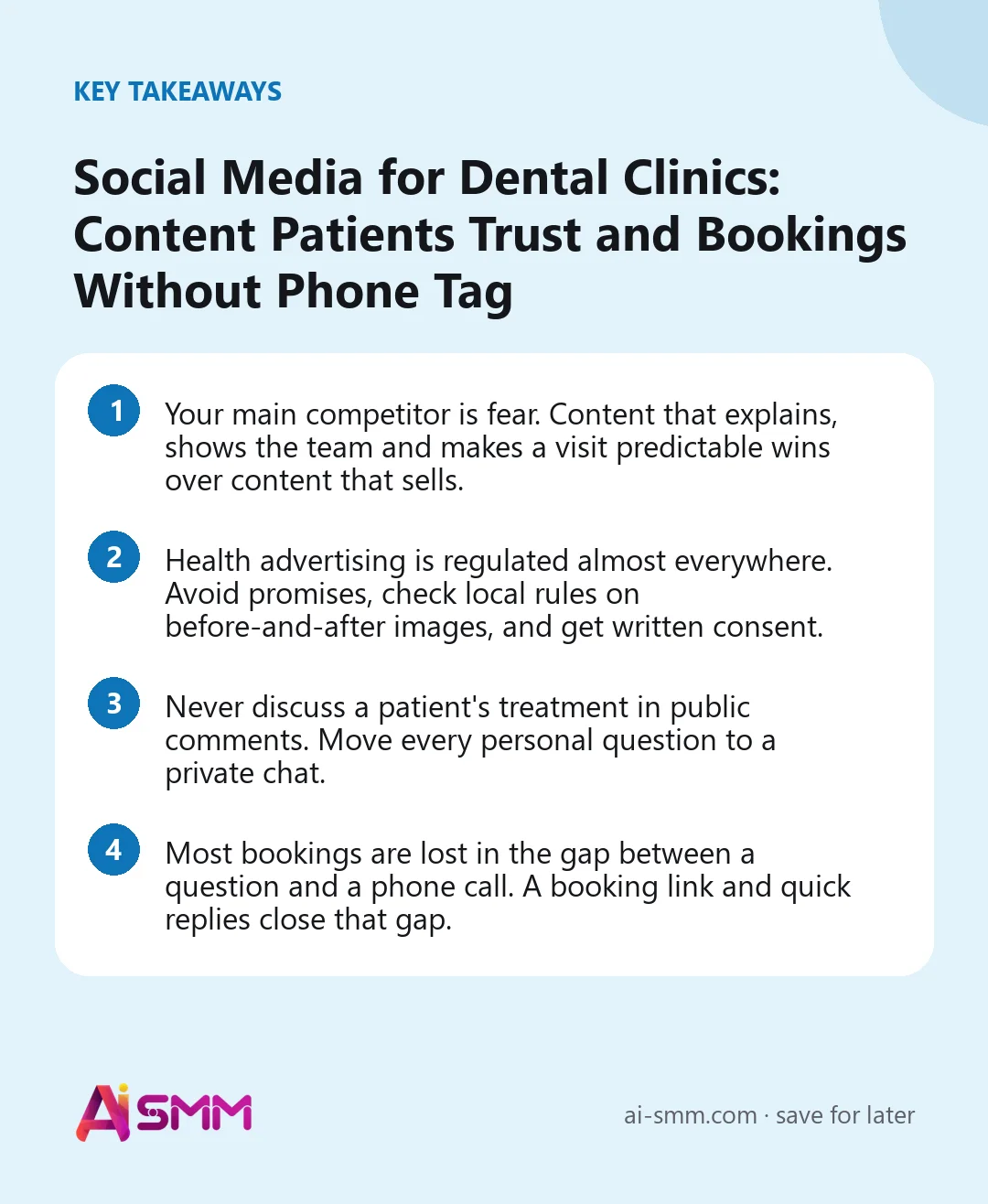
- Your main competitor is fear. Content that explains, shows the team and makes a visit predictable wins over content that sells.
- Health advertising is regulated almost everywhere. Avoid promises, check local rules on before-and-after images, and get written consent.
- Never discuss a patient’s treatment in public comments. Move every personal question to a private chat.
- Most bookings are lost in the gap between a question and a phone call. A booking link and quick replies close that gap.
1. Why social media for dental clinics is about trust, not reach
A dental clinic rarely goes viral, and it does not need to. Most patients live or work within a short trip from the clinic, and they choose based on a handful of questions they may never say out loud:
- Will it hurt, and will they explain what is happening?
- Who is the doctor, and do they seem kind?
- Is the clinic clean and modern?
- Roughly how much will it cost, and will there be surprises?
Your feed is where those questions get answered before the first call. A few thousand local followers who trust you are worth far more than a big audience from other cities who will never book.
2. Choose the right networks
| Network | Best use for a clinic |
|---|---|
| Team introductions, short explainers in Reels, Stories with free slots this week | |
| Local community, family audience, posts about children’s check-ups and events | |
| YouTube | Longer explanations of procedures that people search for before deciding |
| Telegram | A clinic channel with reminders about check-ups, news and answers to common questions |
| Private conversations with patients: scheduling, preparation, follow-up after a visit |
For most clinics, Instagram or Facebook (depending on your patients’ age) plus one private messaging channel is enough. YouTube is worth it if one of the doctors enjoys explaining things on camera.
3. Content pillars with examples
Meet the team
- A short video of each doctor answering “What do you wish patients knew before their first visit?”
- The hygienist, the administrator, the assistant: people patients meet first deserve a face too.
- Training and conferences the team attended, told in plain words rather than a list of certificates.
What happens during a visit
- “Your first check-up, step by step”: arrival, forms, the examination, the conversation about the plan.
- How instruments are sterilized, filmed in the clinic.
- What a professional cleaning feels like and how long it takes.
Patient questions, answered
- “Why do my gums bleed when I brush?” answered as general information with a clear “see a dentist if…” line.
- Myths: “If nothing hurts, I don’t need a check-up.”
- Questions from parents: when to bring a child for the first time, how to prepare them.
Prevention and everyday care
- How to choose a toothbrush and floss, shown in 30 seconds.
- Seasonal posts: sports mouthguards before the school season, care during braces.
- Reminders: “When was your last check-up?” with a link to book.
Keep the tone calm and friendly. Humor works if it is gentle and never at a patient’s expense.
4. Health advertising rules: phrase carefully
Medical and dental advertising is regulated in most countries, and the rules differ widely. This is not legal advice, but a set of habits that keeps most clinics out of trouble. Always check the current rules in your country and with your professional association before you publish.
- No guaranteed results. Avoid “painless”, “perfect smile guaranteed” or “lasts forever”. Describe what a procedure involves, not what it will definitely achieve.
- Be careful with before-and-after photos. Some places restrict or ban them in medical advertising; where they are allowed, they usually need the patient’s written consent and must not be edited.
- No comparisons that cannot be proven, such as “the best clinic in the city”.
- Prices must be honest. If you show “from” prices, make sure a typical patient can actually get that price.
- Warnings and disclaimers. Some countries require a note about contraindications or the need to consult a specialist; follow what applies to you.
- Paid promotion may have extra requirements, such as labeling ads or registering them.
When in doubt, write educational content rather than advertising: “what happens during a root canal treatment” is safer and more useful than “the best root canal treatment in town”.
5. Protect patient privacy in comments and chats
Social media makes it easy to accidentally share things that should stay private. A few rules for the whole team:
- Never confirm that someone is a patient in a public reply, even if they write about their visit first.
- Move personal questions to private messages with a neutral public reply: “Thank you for your question, we have sent you a message.”
- Do not diagnose in chats. Photos of a sore tooth in DMs are common; the answer should always be an invitation to an examination, not a verdict.
- Ask only for what you need to book: name, contact, preferred time. Medical history belongs in the clinic’s own records, not in a messenger thread.
- Answer negative reviews calmly and without details of treatment. Offer to talk privately.
6. Turn questions into booked appointments
The typical path is: someone sees a post, has a question, sends a message in the evening, and gets an answer the next afternoon when they have already called another clinic. Close that gap:
Answer the standard questions instantly
In our experience, most questions a clinic gets are the same handful: prices for a check-up and cleaning, opening hours, whether you accept children, where to park, what to bring. Prepare clear answers once and keep them up to date, so the reply is the same whether it comes at 10 am or 11 pm.
Offer a time, not a phone number
“Please call us” puts the work on the patient. A link to a booking page where they choose the doctor, the service and the time lets them book while they are still motivated.
Remind, then follow up
- A confirmation right after booking with the address and what to bring.
- A reminder the day before, so the slot does not go empty.
- A short message after the visit with care instructions the doctor gave in person, and a link to book the next check-up in six months.
Urgent cases need a human
If someone writes about severe pain or swelling, automation should step aside: a team member answers personally and offers the nearest possible slot, or advises emergency care if needed.
7. A weekly plan for a clinic
| Day | Post | Goal |
|---|---|---|
| Monday | Stories: free slots this week with a booking link | Fill the schedule |
| Tuesday | Reel: a doctor answers one common question | Trust, reach |
| Wednesday | Carousel: “your first visit, step by step” or a prevention tip | Remove fear |
| Thursday | Behind the scenes: sterilization, new equipment, the team | Show quality |
| Friday | Myth or FAQ post, plus a Telegram post for subscribers | Education |
| Saturday | Stories poll: “How often do you change your toothbrush?” | Engagement |
About one and a half to two hours a week is enough: one filming session with a doctor per month can give four to six short videos, and the rest is captions and Stories.
8. Common mistakes
- Close-ups of teeth in every post. Many people find them unpleasant. Show people, the clinic and results only where rules and consent allow.
- Only posting discounts. “20% off whitening” says nothing about why to trust you.
- Medical jargon. Patients understand “the nerve inside the tooth” better than “endodontic treatment”.
- Discussing treatment in public. Even well-meant replies can reveal private health information.
- Slow or missing replies. A patient in pain will not wait until Monday.
- No booking link. A profile with only a phone number loses people who prefer not to call.
- Copying claims from other clinics. Words like “painless” that another clinic uses may still break your local rules.
9. How AI SMM helps a dental clinic
AI SMM keeps the clinic’s content and patient conversations in one place. Online booking lists each doctor with their own schedule and services with duration and price, so a patient picks the right slot themselves, gets a confirmation and a reminder automatically, and a cancelled slot goes to the waiting list. Put the booking link, the address and opening hours on a link in bio page so nobody has to search your website.
The unified inbox brings Instagram and Facebook comments and messages, Telegram and WhatsApp into one list, so the administrator sees every question in one queue. The AI knowledge base answers standard questions about prices, hours and preparation from the materials you wrote, and you decide per channel whether AI sends replies itself or only drafts them for a person to check. Anything medical or urgent goes to a human. Chat flows can send a checklist before the first visit and a reminder to book the next check-up. The AI content studio helps draft educational posts in the clinic’s tone, which a doctor should still review before publishing, and analytics shows which topics bring the most profile visits and messages. For other ideas for neighborhood businesses, see the local business solutions.
10. What to measure
- Appointments booked from social media and messengers per month.
- Share of people who asked a question and then booked.
- No-show rate before and after automatic reminders.
- Patients who return for a check-up within the recommended interval.
FAQ
Can a dental clinic post before-and-after photos?
It depends on your country. Some places restrict or ban them in medical advertising, others allow them with the patient’s written consent and without editing. Check your local rules and professional guidelines first, and when in doubt, show the process rather than the result.
How often should a dental clinic post?
Three to four posts a week plus Stories is a realistic rhythm. Quality and accuracy matter more than frequency: one clear explanation from a doctor does more than daily discount posts.
Should the AI answer medical questions?
No. Use AI for standard, non-medical questions such as prices, hours, preparation and directions. Questions about symptoms or treatment should go to a team member, who invites the patient for an examination.
Which doctor should appear on social media?
Whoever is comfortable on camera and good at explaining. It does not have to be the chief doctor. Patients respond to warmth and clarity more than to titles.
Want evening questions to become confirmed appointments by the morning? Connect a booking page with each doctor’s schedule to your profile and chats in AI SMM.
Posts, chats, video and sales in one workspace. 7 days free.
Start free