
 AI SMM team
Social media for real estate works when it does two jobs at once: it shows listings to people who are actively looking, and it builds trust in you as the agent long before someone is ready to buy, sell or rent. Most agents do only the first, posting listing photos with a price and a phone number, and wonder why the feed looks like a classifieds page nobody follows. This guide covers which networks to use, what to post besides listings, how to turn property videos into a steady flow of content, and how to handle the inquiries that come in so they become viewings.
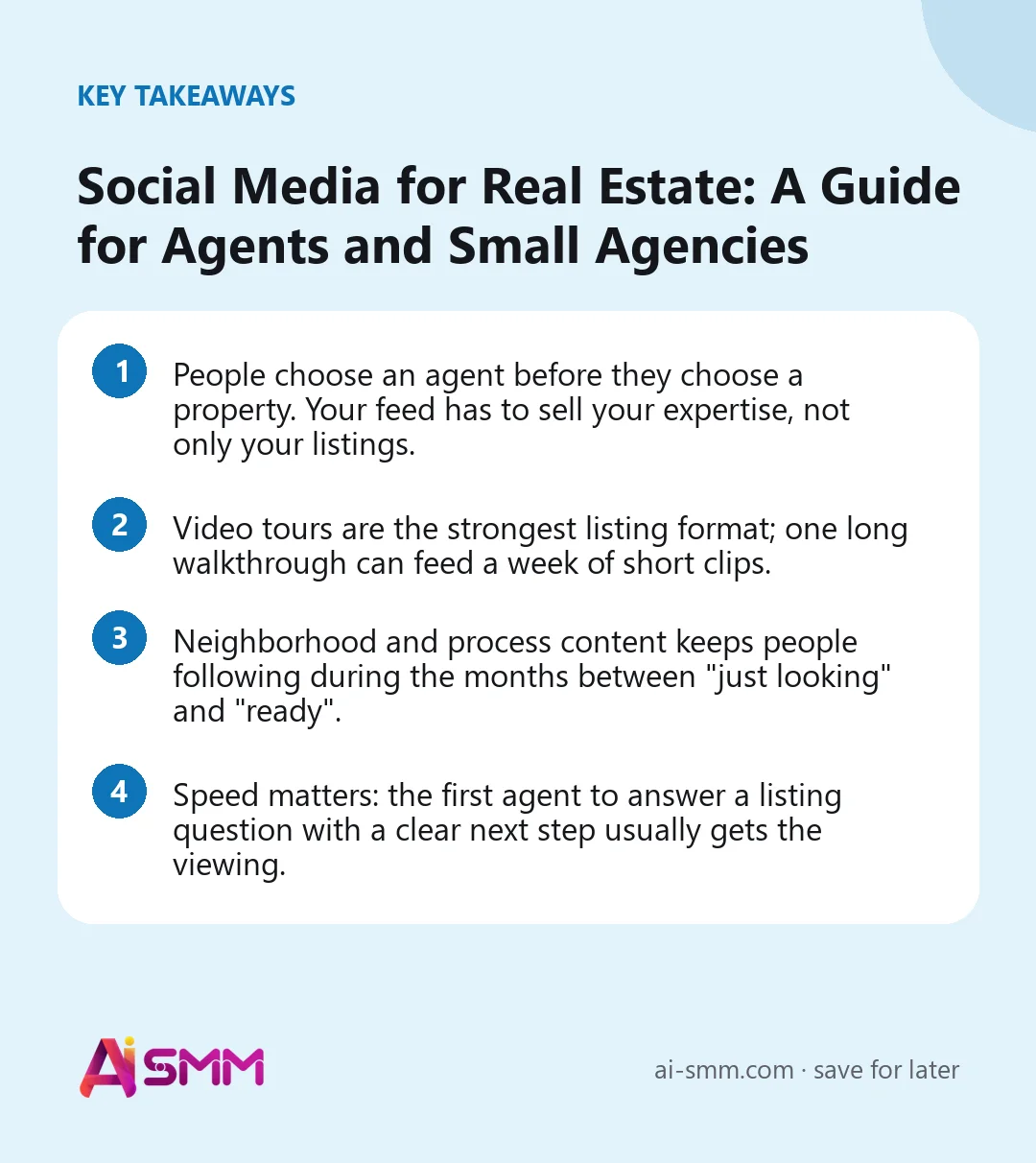
- People choose an agent before they choose a property. Your feed has to sell your expertise, not only your listings.
- Video tours are the strongest listing format; one long walkthrough can feed a week of short clips.
- Neighborhood and process content keeps people following during the months between “just looking” and “ready”.
- Speed matters: the first agent to answer a listing question with a clear next step usually gets the viewing.
1. Why social media for real estate works differently
Real estate is a long, high-trust purchase. A buyer may watch the market for six months before calling anyone, and a seller picks an agent based on who seems to know the area and the process. That creates two audiences with different needs:
- Active buyers and renters want listings, prices, locations and fast answers.
- Future clients (including sellers) want proof that you understand the market, the neighborhoods and the paperwork.
A feed that serves only the first group burns out: listings sell and disappear, and nobody has a reason to follow you between them. A feed that serves both keeps growing, because every useful post about a neighborhood or a mortgage question attracts the people who will need you next year.
2. Choose networks by audience and role
| Network | Best use for real estate |
|---|---|
| Listing carousels, Reels tours, Stories for new listings and open viewings | |
| YouTube | Full walkthroughs, neighborhood guides, market explainers that people find through search |
| TikTok | Short tours and “what this budget buys in this area” clips that reach new audiences |
| Telegram | A channel with new listings as photo albums, price updates and market notes for subscribers |
| Local community reach, listing posts and Reels for an older audience | |
| Commercial property, investors, relocation clients through employers | |
| One-to-one conversations with clients after first contact |
A solo agent should pick one main network (usually Instagram or a Telegram channel, depending on the market) plus YouTube for long videos. Add more only when the first two run smoothly.
3. Build a content mix beyond listings
A simple mix that keeps both audiences engaged:
- Listings (about 40%): new properties, price changes, “just sold” posts.
- Neighborhood content (about 25%): schools, transport, cafés, parks, what living there is like.
- Process and advice (about 20%): how a deposit works, what to check at a viewing, common mistakes when selling.
- You and your team (about 15%): behind the scenes at viewings, client stories shared with permission, your working day.
These proportions are a starting point. If your “what 300,000 buys in each district” posts bring more inquiries than listings do, shift the mix toward them.
4. Listing posts that do not look like classified ads
A listing post competes with every other property on the portals. Make it worth stopping for:
- First image: the single best shot, bright and straight. Not the facade in bad weather.
- Key facts on the first or second slide: price, area, number of rooms, district. People filter fast; do not make them hunt.
- The story: who the home suits. “Quiet two-bedroom for a young family, five minutes’ walk to the school.”
- The floor plan: one of the most-saved slides in any property carousel.
- A clear next step: “Comment VIEW for the full video tour and available viewing times.”
Always post accurate information: real photos, current price, honest description of condition. Misleading listings may break advertising rules and destroy trust fast.
5. Make video the core of your property content
Video lets a buyer walk through a home from the sofa and filters out people who would not like it anyway. One well-shot walkthrough can become a week of content:
- The full tour on YouTube with a searchable title: district, property type, size.
- Three to five vertical clips for Reels, TikTok and Shorts: the kitchen, the view, the best room, a “one thing people miss” detail.
- Stories with a poll: “Would you choose this kitchen layout?”
- Photos from the same shoot for the listing carousel and a Telegram album.
You do not need a film crew. A phone with a stabilizer, daylight and a slow, steady walk are enough. Add subtitles, since most people watch short videos without sound.
6. Own your neighborhoods
Local expertise is the one thing portals cannot copy. Pick the two or three areas you know best and become the account people check before they move there:
- “Living in [district]: pros and cons after five years of selling here.”
- A short walk from the metro to a typical building, filmed in real time.
- Price comparisons: what a similar apartment costs in two neighboring districts.
- New developments, road works, school openings and how they affect prices.
Neighborhood posts attract sellers too. An owner who sees you know their street is more likely to call you when it is time to sell.
7. Turn inquiries into viewings
A listing post that goes well brings dozens of the same questions: “price?”, “is it still available?”, “pets allowed?”, “when can I see it?”. Each unanswered or late answer is a lost viewing.
- Reply to comments quickly and move the conversation to DMs, where you can send details and the tour.
- Prepare standard answers for each listing: price, fees, availability date, pet and parking rules.
- Offer a time, not a question. “Viewings are available Thursday 18:00 or Saturday 11:00, which suits you?” works better than “When would you like to come?”.
- Let people book themselves with a link to a page showing available viewing slots.
Qualify gently: ask about budget, timeline and whether they need to sell first. It saves both sides from viewings that cannot turn into a deal.
After the viewing, send a short message the same day: thank them, answer anything that came up on site and suggest the next step, whether that is a second viewing, a call about the offer or two similar properties worth seeing. Agents who follow up within hours stay top of mind while the client is still comparing options.
8. Nurture the long cycle
Most people who contact you will not buy this month. Keep them close without pressure:
- Invite them to your Telegram channel with new listings and market notes.
- Send a short monthly email with new properties in their price range and one useful tip.
- Tag each contact with what they are looking for (district, budget, type) so you can send them the right listing the day it appears.
A message that says “This new two-bedroom in the district you asked about goes live tomorrow, would you like a private viewing first?” is the kind of follow-up that wins deals.
9. Stay on the right side of the rules
Real estate advertising is regulated in most countries. Check the local rules on how prices and fees must be shown, whether you need a license number in ads, and anti-discrimination requirements for wording. Get sellers’ permission before posting photos or videos of their home, avoid showing personal items or documents, and never reveal details that could put an owner’s safety at risk, such as when the home is empty.
10. Measure what brings clients
Track a few numbers per listing and per month:
- Inquiries per listing and where they came from (which network, which post).
- Viewings booked from social media.
- Deals or signed agreements where the client first found you on social media.
- New subscribers to your channel or newsletter.
After a few months you will see which network and which content type bring real clients, and you can stop spending time on the rest.
11. Doing this in AI SMM
AI SMM gives agents and small agencies one workspace for the whole flow. Video clipping turns a long walkthrough on YouTube into vertical clips with subtitles for Reels, TikTok and Shorts, and all posts, carousels and Telegram albums go into one calendar. A comment-to-DM flow from chat automation sends the tour and viewing times to everyone who comments on a listing, and the AI knowledge base answers standard questions from the listing details you add. A booking page lets clients pick a viewing slot with an agent themselves, with confirmations and reminders sent automatically. For more ideas on local marketing, see the local business solutions.
12. A weekly plan for a solo agent
A realistic rhythm when you are showing homes, meeting clients and handling paperwork at the same time:
| Day | Post | Time needed |
|---|---|---|
| Monday | New listing carousel with floor plan, plus a Telegram album | 30 minutes |
| Tuesday | Short clip from the week’s walkthrough video | 10 minutes |
| Wednesday | Advice post: a question clients asked this week, answered | 20 minutes |
| Thursday | Second clip or a Stories series from a viewing | 10 minutes |
| Saturday | Neighborhood post or a “just sold” story | 20 minutes |
That is about an hour and a half a week if you batch it: film one walkthrough, write the week’s captions in one sitting and schedule everything on Sunday evening. Stories from viewings and quick replies to comments happen during the week as they come.
The weekly advice post is the easiest to fill. Every question a client asks you in person, about deposits, inspections, mortgage approval or moving dates, is a post that other people in the same position are searching for right now.
FAQ
What is the best social media platform for real estate agents?
It depends on your market. Instagram and YouTube work well almost everywhere for visual listings and tours; in Russian-speaking markets a Telegram channel with new listings is often just as important. Start with one main network and YouTube for long videos.
How often should a real estate agent post?
Three to five posts a week plus Stories is a realistic rhythm for a solo agent. Consistency matters more than volume: a steady schedule over months builds more trust than bursts around new listings.
Should I post listings that are already sold?
Yes, clearly marked as sold. “Just sold” posts show sellers that you close deals, and they give you a natural reason to ask similar buyers to get in touch.
Can social media replace property portals?
Not entirely. Portals catch people searching for a specific type of property right now. Social media builds your personal brand, reaches people before they start searching and brings sellers who choose an agent they already know.
Want every listing question to turn into a booked viewing? Set up a viewing booking page in AI SMM and connect it to your listing posts.
Posts, chats, video and sales in one workspace. 7 days free.
Start free